Risk Assessment
Risk Assessment
What It Means & Why It Matters
What is Risk Assessment?
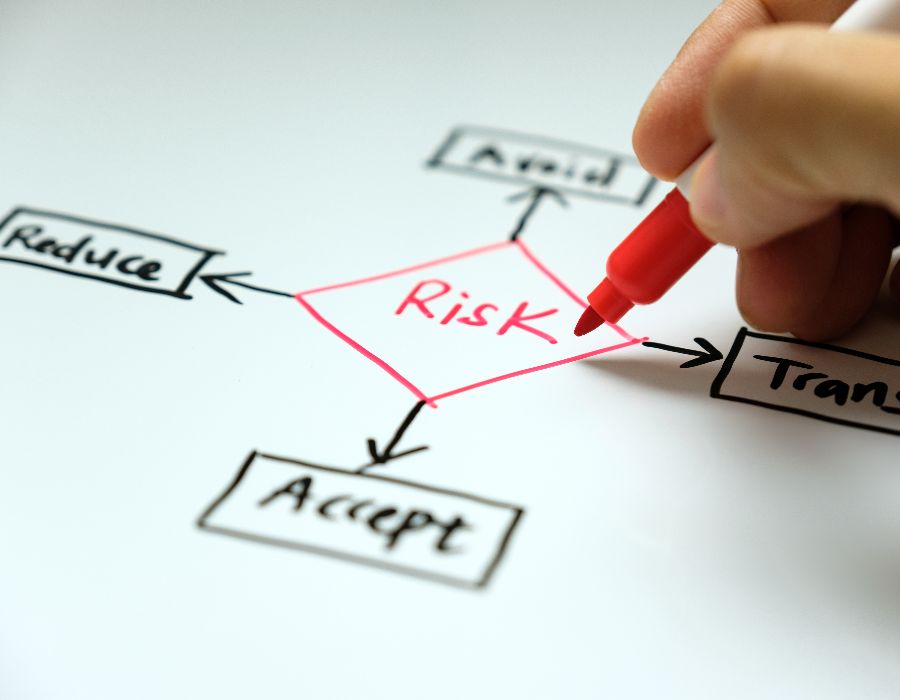
Risk assessment is the systematic process of identifying, evaluating, and prioritizing potential hazards, threats, or failures that could harm people, assets, operations, product quality—or expose your company to compliance or regulatory failure.
In regulated industries (cybersecurity, manufacturing, medical devices, OT/ICS, etc.), risk assessment is not a luxury — it is a foundational requirement.
- Under ISO 13485:2016 for medical-device manufacturing, risk management must cover not just patient-safety hazards, but also device performance and regulatory compliance risks.
- Frameworks such as NIST SP 800-30 / NIST SP 800-53 emphasize structured risk-evaluation processes: identify assets & threats → analyze vulnerabilities & impacts → evaluate risk levels → implement controls → monitor & review.
A robust risk assessment helps you answer:
- What could go wrong?
- How likely is it?
- What is the potential severity or impact?
- What controls or mitigation must we apply?
- How do we document it so we can prove we made those decisions?
Why Most Organizations Fail at It
Risk assessment is hard when done manually — especially for small or mid-size teams often juggling many other priorities. Common problems:
Scattered or absent asset inventory — without knowing what you own, you can’t assess what needs protection.
Uncontrolled documentation — spreadsheets, emails, and notes make it nearly impossible to show a clean, audit-ready history.
No recurring process — risk assessment done once, then forgotten; no updates after changes (new devices, new suppliers, new personnel).
Lack of traceability — no clear link between a risk, its controls, verification, and ongoing tasks.
Overwhelm for small teams — especially when the same people build product, support customers, and try to maintain compliance.
In short: without structure and a system, risk assessment becomes “best-effort chaos.” When regulators come calling — you won’t have evidence, only excuses.
How MAMAT Solves Risk Assessment: Built-In, Real-World, Multi-Industry
Because MAMAT replaces:
MAMAT isn’t just another asset-tracker. It’s designed to embed risk assessment & risk-management workflows directly into everything you do. Here’s how:
One Unified Asset & Risk Registry
- Inventory every asset: IT, OT, medical devices, industrial equipment, infrastructure.
- Tag assets with risk-relevant metadata (device type, criticality, owner, location, lifecycle).
- Use the registry as the foundation for risk analysis — whether for cybersecurity, device safety, regulatory compliance, or operational integrity.
Configurable Risk Frameworks & Templates
- Define your risk assessment methodology — qualitative or quantitative.
- Customize risk categories (safety, regulatory, performance, cybersecurity, operational).
- Use built-in templates (or create your own) for hazard identification, risk scoring (likelihood × severity), mitigation tracking, and residual risk evaluation.
Best practices in risk management suggest using a well-defined rating system and documenting all assumptions — whether using numerical or qualitative scales.

Task & Evidence Tracking for Every Risk Event
For every identified risk:
- Schedule mitigation tasks (maintenance, validation, calibration, software update, training, inspection).
- Assign an owner, due date, and status.
- Upload evidence: test reports, calibration certificates, validation docs, audit logs, inspection photos, or compliance sign-offs.
With MAMAT, you don’t just say you mitigated the risk — you prove it.
Lifecycle Risk Management — Continuous, Not Once-and-Done
Risk assessment isn’t a one-and-forget checklist. As assets change, processes evolve, or new regulations emerge, risks shift. MAMAT enables:
Scheduled risk-review cycles (e.g. quarterly, annually)
Change-triggered re-assessment (new device, new software, supplier change)
Historical tracking — you can always see what changed, when, by whom, and why
This aligns with best practices in both safety and cybersecurity — continuous monitoring and periodic re-evaluation of controls and risks.
Compliance & Audit-Ready by Default
Whether you follow ISO, NIST, OT standards, internal policies, or contractual obligations — MAMAT gives you the architecture to:
Document hazard analyses, risk evaluations, mitigation plans, residual risk assessments
Link risks to assets, tasks, controls, training, audits, complaint or incident records
Generate exportable reports showing traceability and evidence for regulators, auditors, customers, or partners
This reduces the “audit sprint” from weeks to minutes.
Scalable & Company-Size Agnostic
MAMAT works for:
Small startups building a first device or system
Mid-size industrial or medical companies scaling production and compliance
Large organizations with complex, multi-site operations
Because MAMAT is flexible, you can start simple — then grow the risk-management program as you grow.
Scalable & Company-Size Agnostic
MAMAT works for:
Small startups building a first device or system
Mid-size industrial or medical companies scaling production and compliance
Large organizations with complex, multi-site operations
Because MAMAT is flexible, you can start simple — then grow the risk-management program as you grow.
The MAMAT Risk Assessment Workflow Suggested Minimal Kit
- Asset Inventory — list all relevant assets: devices, equipment, software, infrastructure
- Risk Identification — brainstorm hazards, threat vectors, failure modes per asset
- Risk Scoring — assign likelihood and impact (qualitative or quantitative)
- Mitigation Planning — define controls, owner, due date, resources
- Task Creation — schedule and assign mitigation tasks (maintenance, inspection, updates, training…)
- Evidence Upload — link full documentation (calibration records, test reports, validation, audit logs)
- Residual Risk Evaluation — after mitigation, assess if risk is acceptable or needs further controls
Review & Monitoring — periodic re-assessment, especially when changes occur (new assets/changes, incident reports, regulatory updates)
This flow aligns with international risk-management guidance whether for devices, cyber systems, or industrial operations.

Why Risk Assessment Matters — Across Industries
Medical Devices: patient safety depends on design, production, and post-market risk controls; theoretical risk becomes real harm if unchecked. ISO risk-management frameworks are crucial.
IT / Cybersecurity: with growing cyber threats, unprotected devices or outdated software lead to data breaches, system downtime, compliance fines. NIST-style risk assessments are often required by customers or regulators.
Industrial / OT / IoT / Manufacturing: failure of a single instrument or PLC can paralyze production lines, cause safety incidents, or result in regulatory non-conformances. Risk management maintains uptime and compliance.
Mixed Environments & Growing Complexity: As companies grow, diversify assets, or enter regulated markets (medical, offshore, defense), risk multiplies. Without structure, risk becomes chaos.
MAMAT’s universal, flexible backbone gives you one system that works everywhere.
Ready to Build Your Risk-Ready Backbone?
If you’d rather spend time building your product, serving customers, or innovating — instead of chasing spreadsheets and compliance nightmares — then MAMAT is for you.
Start with a free trial.
Build your asset registry.
Run your first risk assessment.
Attach evidence, assign mitigations, and sleep easier.
Because managing risk isn’t optional — but with MAMAT, risk doesn’t have to be a burden.